
What information should you provide before starting a design project?
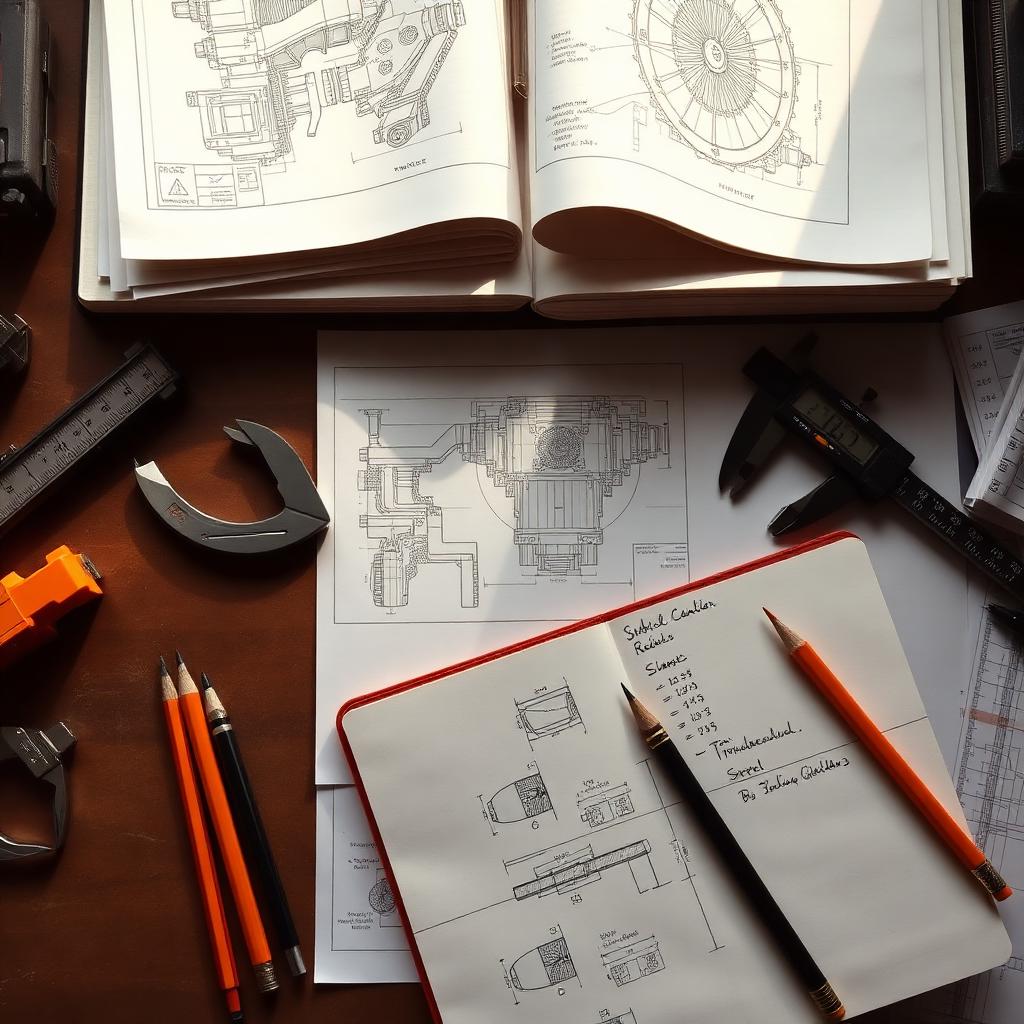
Getting a mechanical design project off to a strong start depends far less on the complexity of the work than on the quality of information exchanged at the outset. When a client approaches NM Engineering & Design with a new brief, the conversations in the first few days shape everything that follows, from the accuracy of cost estimates to the suitability of the final design for manufacture.
Engineers who provide thorough, well-structured briefs consistently see faster turnaround times, fewer revision cycles, and better outcomes. Those who hand over a rough sketch and a verbal description often find that early time savings are swallowed up by avoidable rework later.
A clear description of what you need the product to do
The most fundamental piece of information any design engineer needs is a plain-language description of the product's function. Not what it looks like, what it does. Describe the problem it solves, the task it performs, and the outcome it must reliably achieve. If you are commissioning a bespoke machine guard, explain what it is guarding against and under what conditions. If you need a bracket assembly, describe what loads it will carry, in which directions, and for how long.
Functional requirements are distinct from design requirements. The former describe what must happen; the latter constrain how it happens. Conflating the two early in a project can inadvertently lock in a particular solution before the design process has had a chance to explore better alternatives. Separating them gives the engineering team room to innovate while keeping the deliverable firmly anchored to your actual need.
Dimensional envelopes and interface constraints
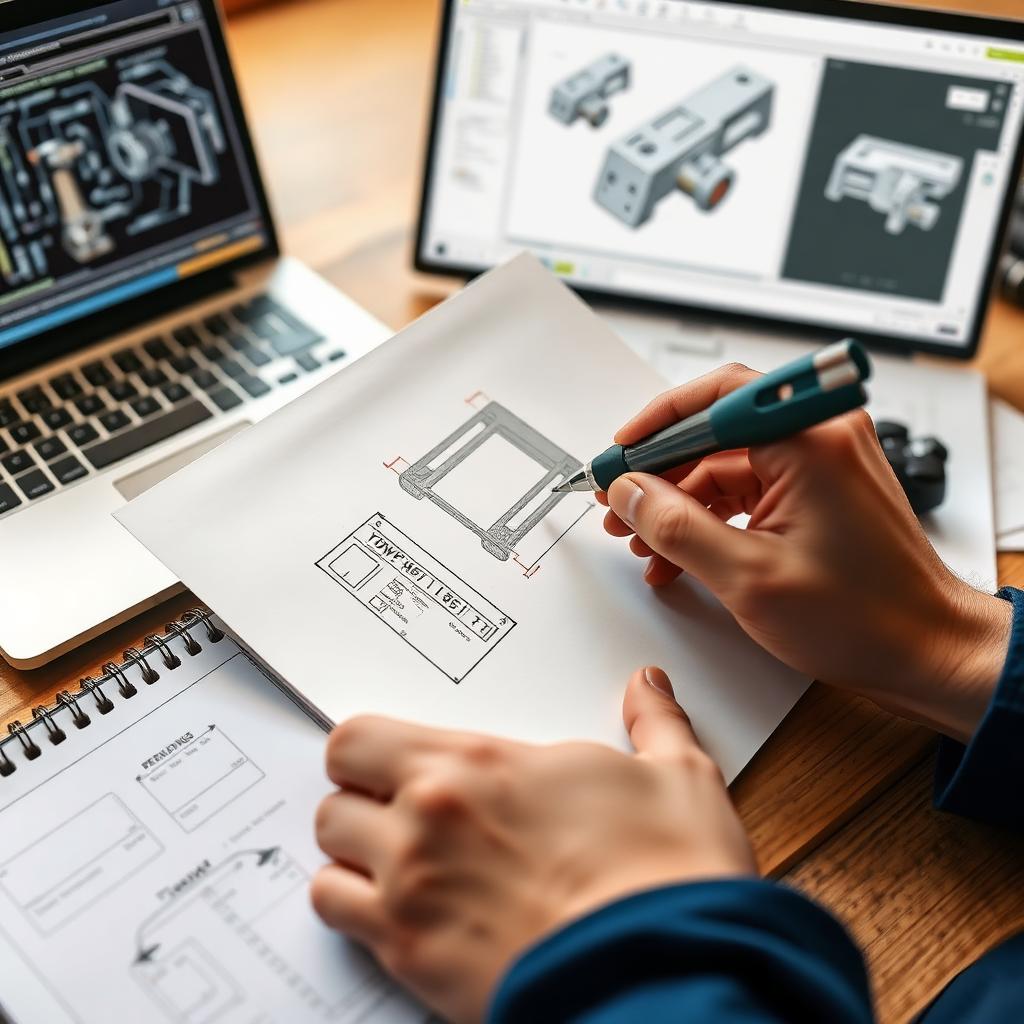
Almost every mechanical design exists within physical constraints imposed by its surrounding environment. Share what space is available, maximum envelope dimensions, clearance distances, and any hard boundaries the design must not exceed. Equally important are interface points: where the component connects to, slots into, or rests against other parts. Bolt hole patterns, thread specifications, shaft diameters, and datum surfaces all need to be communicated accurately.
If the product must integrate with existing equipment, provide drawings or models of those mating components. Even rough sketches with handwritten dimensions are useful at this stage. The goal is to prevent the design team from making assumptions about interface geometry that will later prove incorrect, a mistake that typically only reveals itself during prototype fitting or first article inspection.
Operating environment and loading conditions
Material selection, surface finish, fastener specification, and sealing requirements are all driven by the environment the product will operate in. A component destined for a food processing facility has very different requirements from one designed for an outdoor agricultural application or a cleanroom pharmaceutical environment. Provide information on ambient temperature ranges, exposure to moisture, chemicals, or UV radiation, dust ingress, and any regulatory cleanliness standards that apply.
Mechanical loads need to be quantified wherever possible. Static forces and moments are relatively straightforward to specify; dynamic and cyclic loads require more detail, frequency, amplitude, and the total number of cycles expected over the design life. If fatigue is a potential failure mode, that information is essential input to the design process. Where precise load data is unavailable, sharing the operating scenario in enough detail allows experienced engineers to make reasonable conservative assumptions.
Target volume and manufacturing route
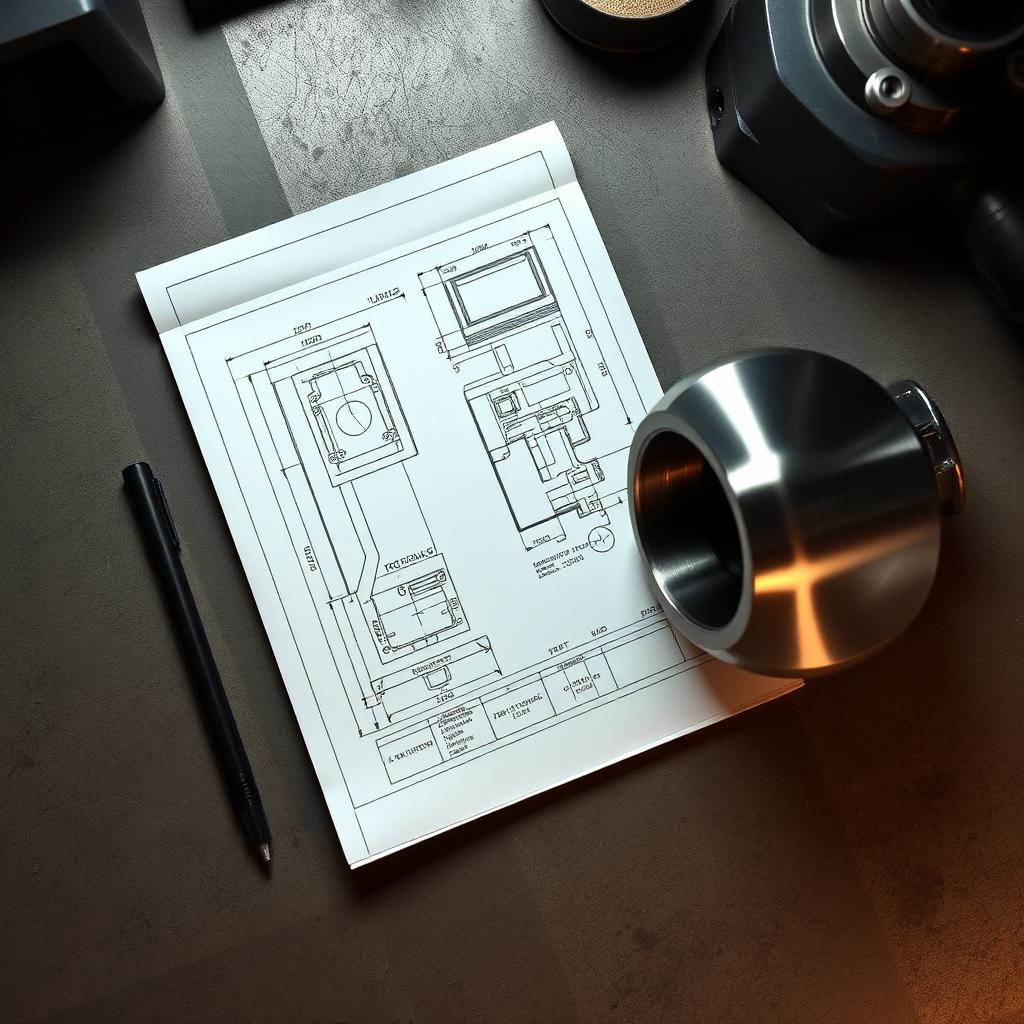
The intended production volume fundamentally shapes how a part should be designed. A component produced as a one-off prototype is designed quite differently from one destined for a production run of ten thousand units. Tooling costs that are entirely justifiable at volume become prohibitive in low quantities; conversely, designs optimised for one-off CNC machining may not scale cost-effectively to injection moulding or die casting.
If you have a preferred manufacturing route, because of existing supplier relationships, in-house capabilities, or prior experience with a particular process, share that preference early. If you are open to guidance on manufacturing method, say so; your design consultant can advise on the most cost-effective approach for your volume and geometry.
Budget and cost targets
Sharing a target unit cost or an overall project budget is not a negotiating weakness, it is essential design input. A design that exceeds budget is not a good design, regardless of its technical elegance. When engineers know what the economics require, they can make informed trade-offs between material choice, tolerancing, surface finish, and assembly complexity. Without that guidance, there is a real risk of delivering a technically sound design that your supply chain cannot produce at the required price point.
Where a firm cost target does not yet exist, a rough order of magnitude is still valuable. Knowing whether the project budget is in the hundreds, thousands, or tens of thousands of pounds allows the engineering team to calibrate their approach accordingly.
Regulatory, standards and certification requirements
Many industries operate under specific regulatory frameworks that impose requirements on materials, design methodology, documentation, and testing. Medical devices, pressure-containing equipment, lifting accessories, machinery intended for sale in the UK or EU, food contact materials, and ATEX-rated products all carry compliance obligations that must be built into the design from the outset rather than retrofitted at the end.
If you know that your product falls under particular legislation or must comply with specific British Standards or EN harmonised standards, provide that information upfront. If you are unsure, share the application and intended market, an experienced engineering consultancy can identify the relevant compliance requirements and factor them into the design process.
Timeline and key milestones
A realistic programme is something both client and consultant need to agree on early. Share any fixed deadlines, trade show appearances, production launch dates, investor demonstrations, or seasonal ordering windows, along with any flexibility that exists within the schedule. Understanding which milestones are immovable allows the engineering team to prioritise accordingly and flag early if the programme is at risk.
It is also worth stating your expectations around communication and reporting. Some clients want weekly progress updates; others prefer to receive work packages at agreed review gates. Aligning on this at the start prevents misunderstandings and ensures that you have the visibility you need without creating unnecessary overhead.
Existing designs, IP and reference material
If the project involves updating or replacing an existing product, share the original drawings, models, or physical samples where possible. Understanding how previous designs performed, and crucially, where they fell short, is invaluable context. Similarly, if there are competitor products that you admire or wish to avoid emulating, say so. Reference images, teardowns, and annotated examples of "what good looks like" all help the design team understand your expectations more precisely than a written specification alone.
Where intellectual property considerations are relevant, either in protecting your own designs or in ensuring that the new design does not infringe third-party rights, raise these at the start. A reputable engineering consultancy will operate under a non-disclosure agreement as standard; do not hesitate to request one before sharing sensitive commercial information.
A practical checklist before you make contact
Before reaching out to a design consultant, it is worth gathering:
- A written functional description of the product
- Key dimensional constraints and interface requirements
- Operating environment details
- Expected load conditions
- Target production volume and preferred manufacturing route
- Unit cost or project budget guidance
- Applicable standards or regulatory requirements
- Timeline with fixed milestones
- Any existing drawings, models or competitor references
You will not always have complete answers to all of these at the outset, and that is entirely normal. Part of the value an experienced engineering consultancy brings is helping to define and refine requirements that are still developing. But the more complete your brief, the more accurate your quotation, the more efficient the design process, and the more likely the outcome is to meet your expectations the first time.

Start the conversation with NM Engineering & Design
At NM Engineering & Design, we work with clients at every stage of the product development journey, from early-stage concept work through to production-ready design packages. Whether your brief is fully formed or still taking shape, we are happy to have an initial conversation to help you clarify what you need and how we can best support you.