
CNC machining vs 3D printing: which is better?
Ask ten engineers whether CNC machining or 3D printing is the better choice, and you will get ten different answers — usually followed by "it depends." That is the correct answer, but it is not a helpful one. The truth is that neither process is universally superior; each excels in a particular set of circumstances, and the skill lies in matching the process to the part, the material, the volume and the deadline in front of you. At NM Engineering & Design we specify both routes across client projects every week, and the decision rarely comes down to a single factor. Here is how we think about it.
Subtractive versus additive, a fundamental difference
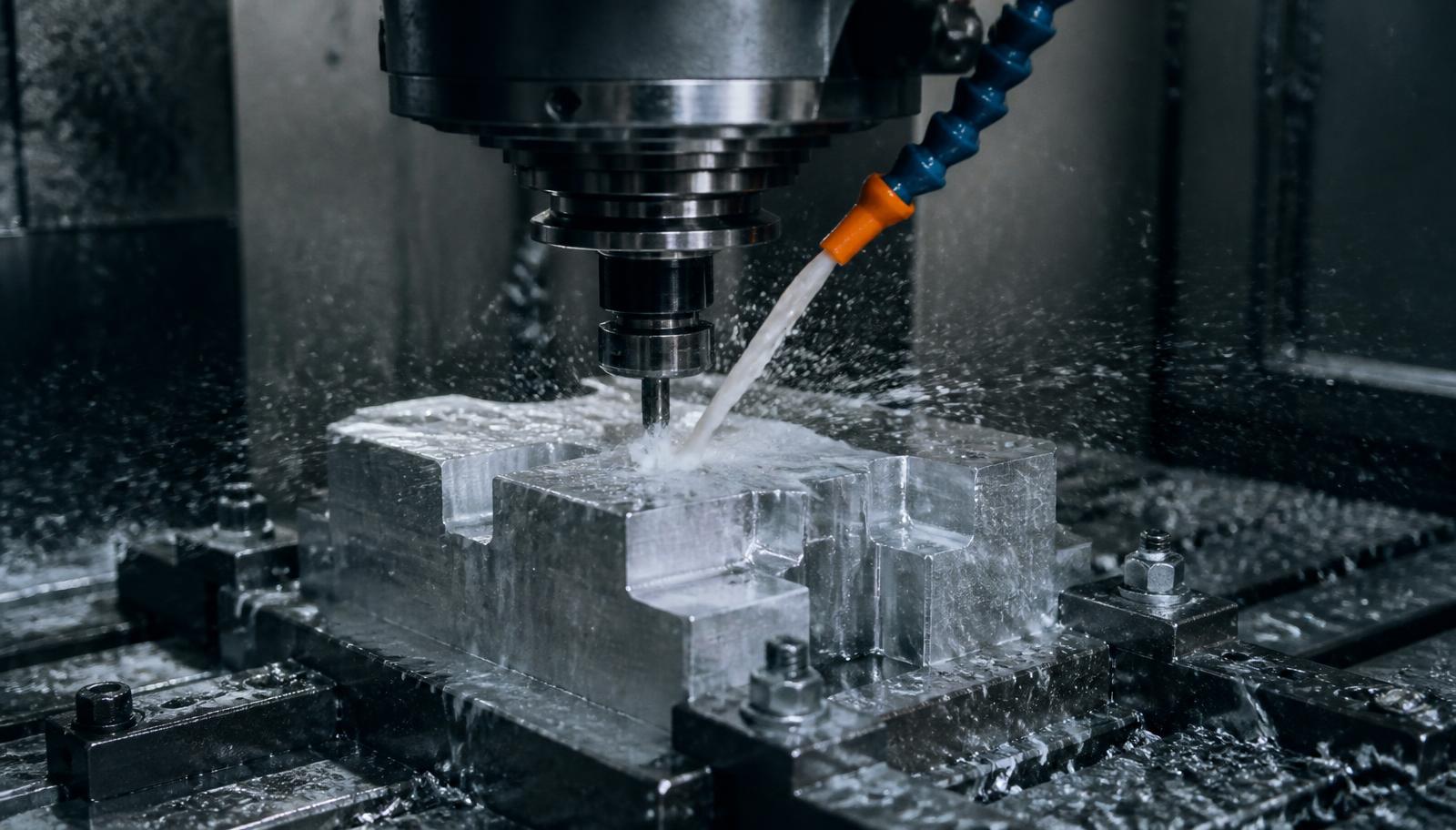
CNC (Computer Numerical Control) machining is a subtractive process: a solid block of material, often called a billet or blank, is clamped in place and a cutting tool removes material until the finished geometry remains. 3D printing, by contrast, is additive: the part is built up layer by layer from nothing, whether by melting filament (FDM), curing liquid resin (SLA/DLP) or fusing powder with a laser (SLS/DMLS).
That single distinction cascades into almost every trade-off that follows: how fast a part can be made, what it costs, how strong it is, and what geometry is even possible. Understanding it is the foundation of choosing well.
Where CNC machining wins
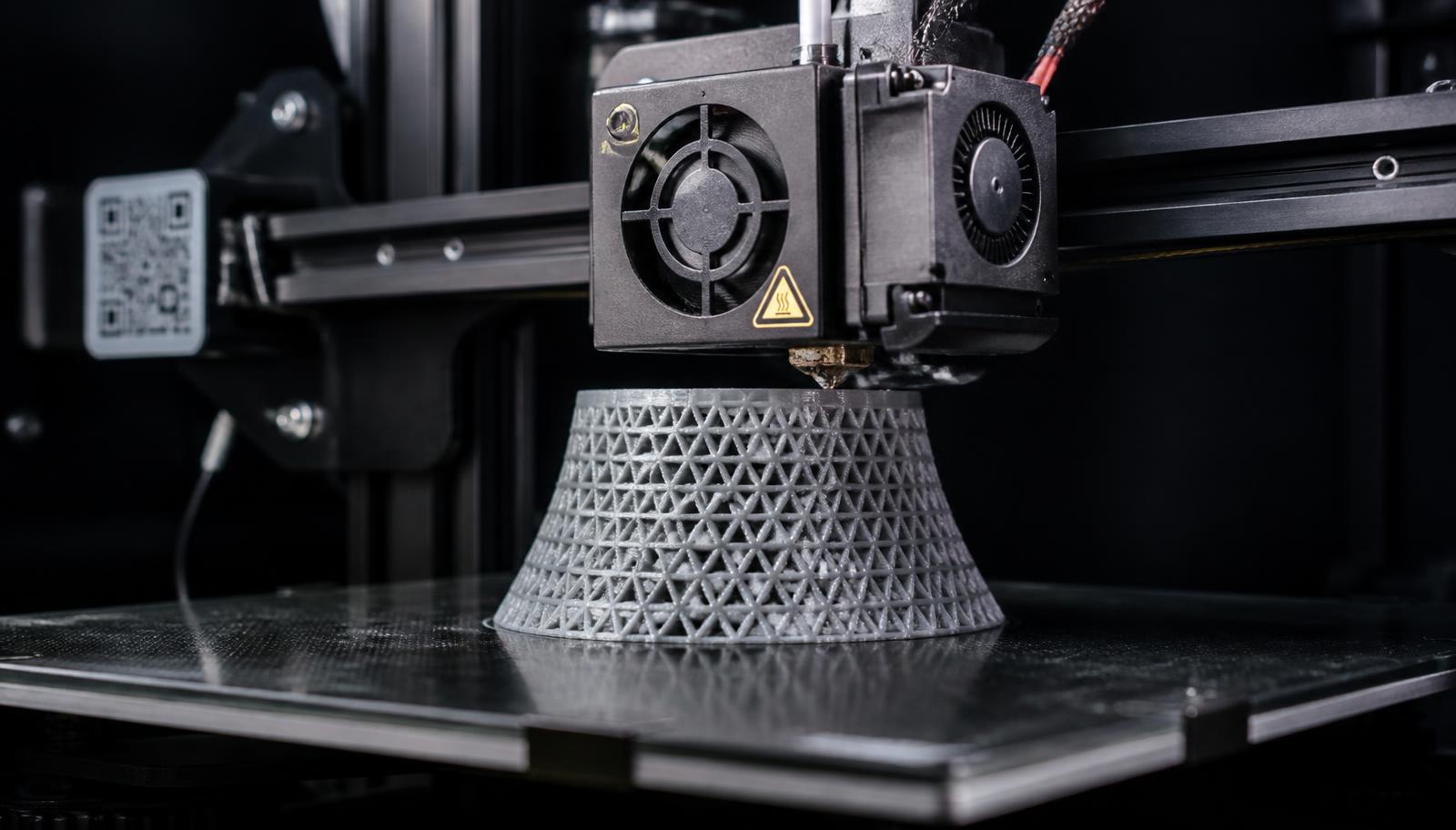
Machining remains the benchmark for accuracy, surface finish and material integrity. A well-set-up CNC mill or lathe will hold tolerances of ±0.025 mm or tighter as standard, and because it starts from fully dense stock, the finished part inherits the mechanical properties of that material — no anisotropy, no layer adhesion to worry about. If you need a component in 6082-T6 aluminium, EN8 steel or a certified engineering plastic that behaves predictably under load, machining is usually the honest answer.
It also scales well. Once a machine is programmed and fixtured, the marginal cost of each additional part falls sharply, which makes CNC the natural choice for small-to-medium production runs as well as one-offs that demand precision. The trade-offs are geometric: deep internal cavities, undercuts and organic lattices are difficult or impossible to reach with a rotating tool, and complex parts may need multiple set-ups, which adds time and cost.
Where 3D printing wins
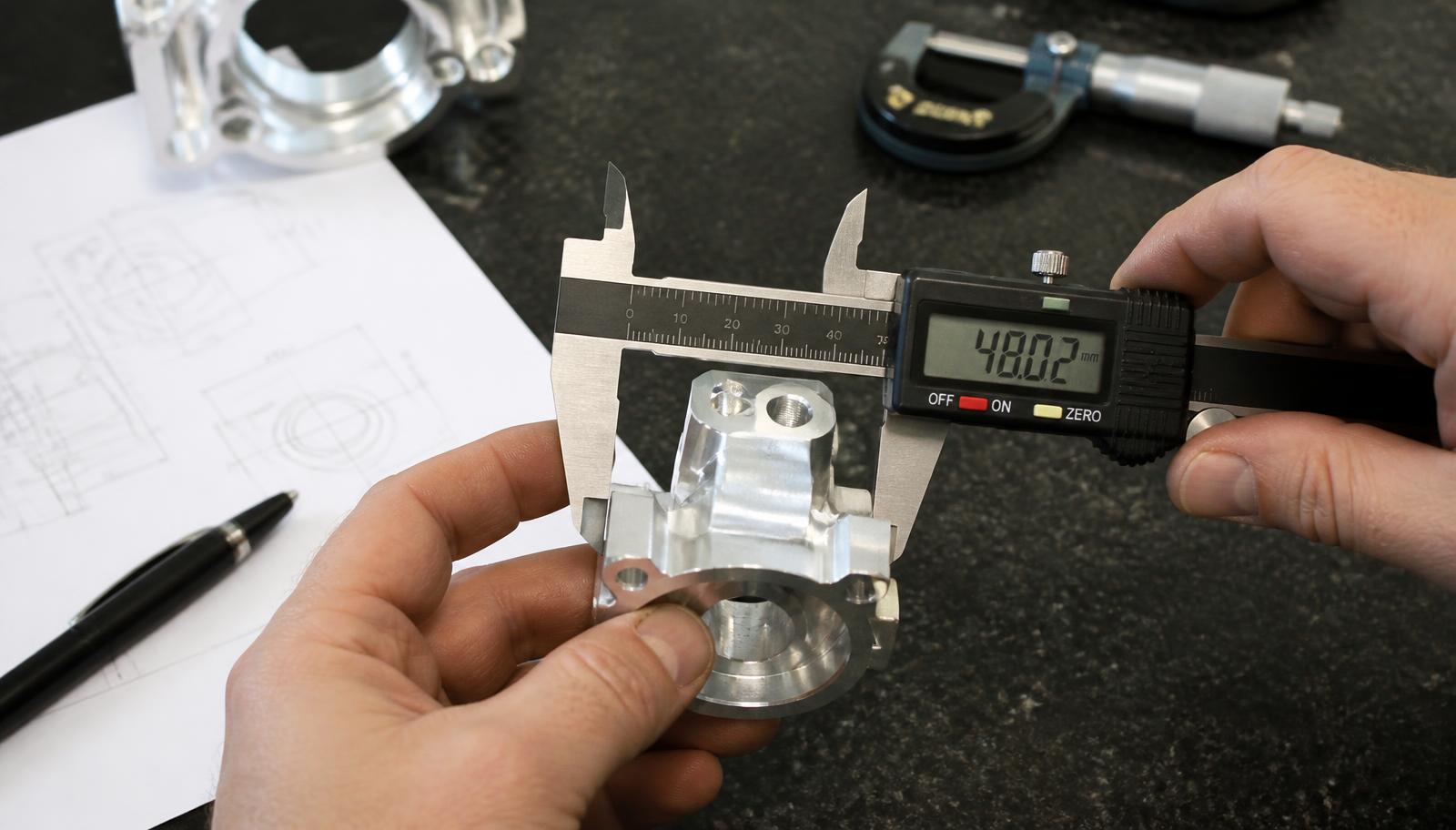
3D printing's headline strength is geometric freedom. Because the part grows layer by layer, internal channels, conformal cooling passages, lattices and consolidated assemblies that would be unmachinable — or would require several machined components bolted together — can be produced in a single build. For prototyping this is transformative: an engineer can hold a physical part the morning after finishing the CAD model, iterate, and reprint the same day, with no tooling and no fixturing.
Printing also decouples cost from complexity. A more intricate part does not necessarily cost more to print, whereas in machining every extra feature is extra tool time. For low volumes, bespoke geometries, jigs and fixtures, and functional concept models, it is frequently the faster and cheaper route. The caveats are real: layer lines and stepping affect surface finish, printed parts can be weaker along the build direction, and the palette of genuinely production-grade materials, while growing fast, remains narrower than what a machine shop can cut.
Cost, volume and lead time
For most projects the deciding trio is cost, volume and lead time. As a rough guide, 3D printing tends to be more economical for one-offs and very low volumes, where tooling and set-up would otherwise dominate. As quantities climb into the tens and hundreds, CNC machining's low marginal cost per part usually overtakes it, and beyond that, other processes such as injection moulding or casting may become cheaper still.
Lead time cuts the other way for prototypes. A printed part needs no programming or work-holding, so it can often be in your hand faster, whereas a machined part carries that up-front effort but delivers a finished, production-representative component in return.
Material considerations
Material choice often settles the argument before any other factor. If the application demands a specific certified alloy, tight temperature performance, or fully isotropic strength, machining from qualified stock gives you confidence the part will behave as the datasheet says.
If the value is in geometry — light-weighting through lattices, integrated channels, or consolidating a multi-part assembly into one — additive manufacturing earns its place. Metal 3D printing (DMLS/SLM) has narrowed this gap considerably for high-value aerospace and medical components, but it brings its own cost, post-processing and validation overheads that need to be weighed honestly.
It is rarely either/or
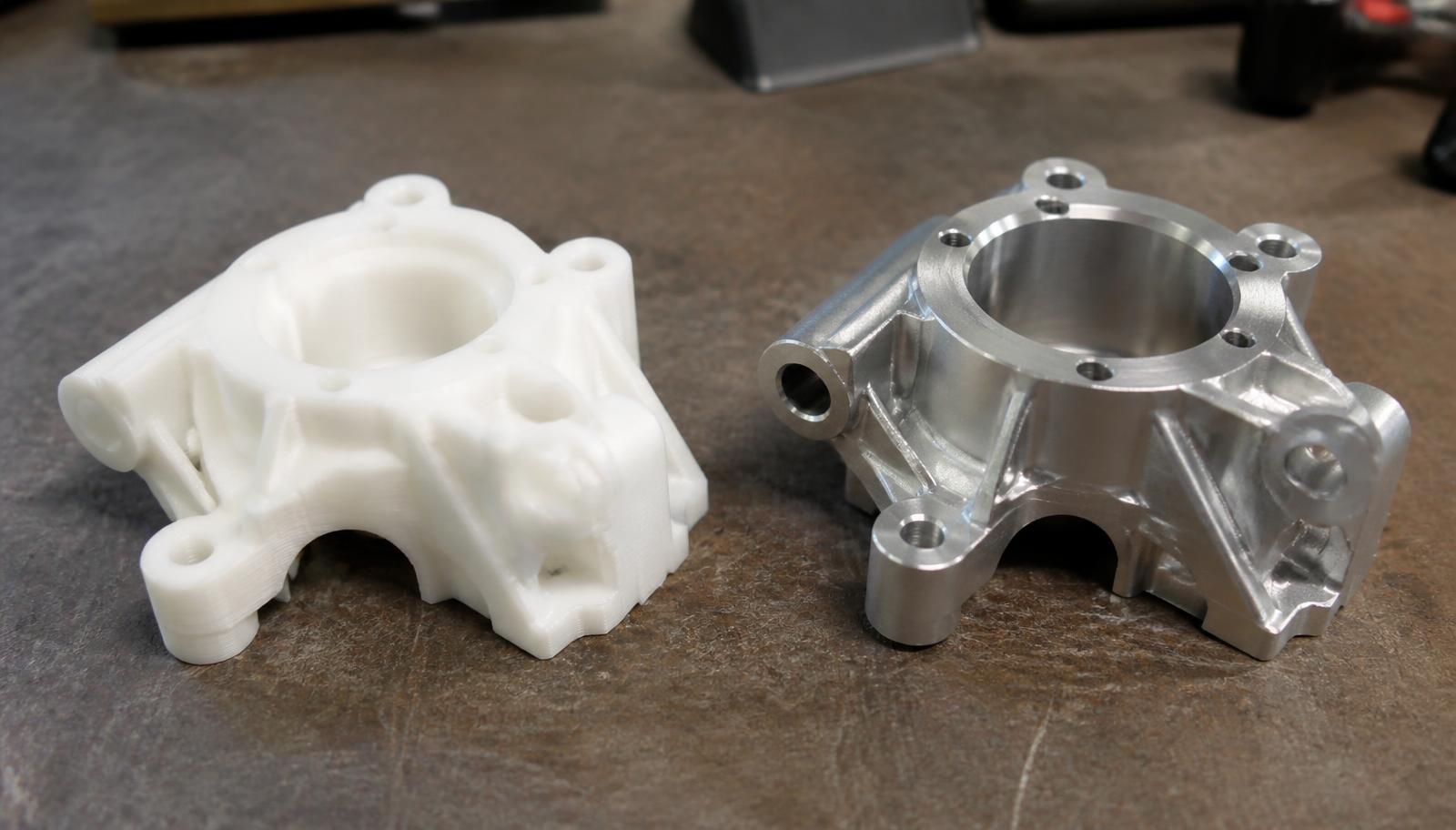
In practice the two processes complement rather than compete. A common and effective workflow is to 3D print early prototypes to prove form, fit and function quickly and cheaply, then transition to CNC machining for the pre-production and production parts once the design is locked. Hybrid approaches, such as printing a near-net shape and machining only the critical mating faces, can capture the best of both.
The mistake is to treat the choice as a loyalty test to one technology. The better question is always: what does this specific part, at this specific volume, actually need?
Making the right call for your project
Choosing between CNC machining and 3D printing is really a design-for-manufacture decision, and it is best made early, before the CAD is finished, not after. Get it right and you shorten your development cycle, reduce cost and avoid redesigns; get it wrong and you can pay for it in scrapped parts and slipped deadlines.
If you are weighing up the best route to manufacture for a new product or component, NM Engineering & Design can help you make that call with confidence, and design the part to suit whichever process fits. Get in touch to talk it through.